Buying real estate in Bacolod City is a major milestone, whether you are investing in a booming commercial area along Lacson Street or purchasing a residential lot in a growing subdivision. However, a smooth transaction is never guaranteed. In property law, the golden rule is caveat emptor—let the buyer beware. Hence, property due diligence is non-negotiable.
Before you hand over your hard-earned money, you must verify the legal health of the property. The absolute starting point for this is Title Verification at the Registry of Deeds (ROD) Bacolod City.
Here is a hyper-local, practical guide on how to verify a land title in Bacolod, why it is non-negotiable, and exactly what to expect when you visit the ROD.
The “Why”: Why a Simple Photocopy of a Title is Never Enough
Many buyers make the mistake of relying on the photocopy of the Transfer Certificate of Title (TCT) provided by the seller or developer. This is a critical legal risk.
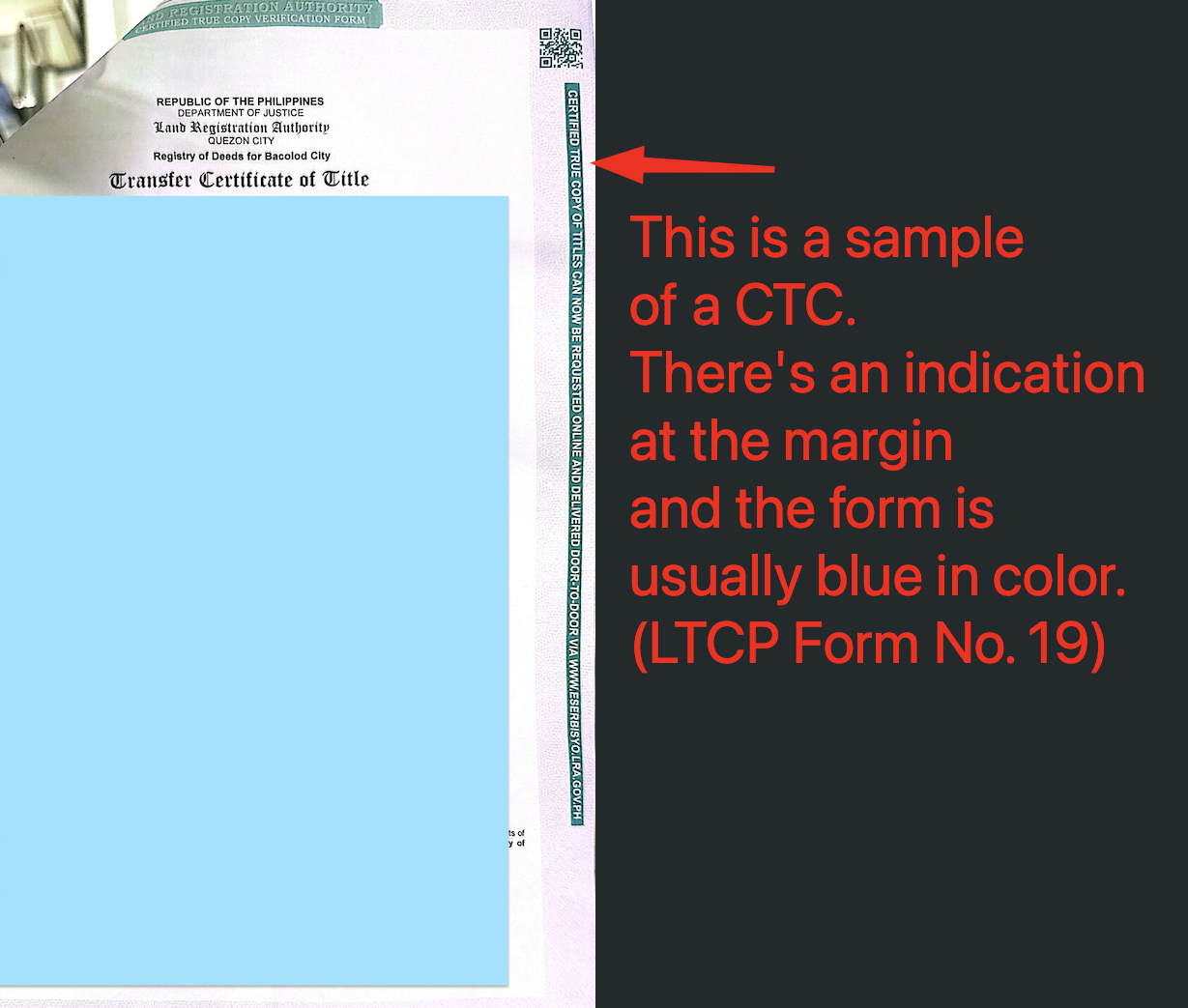
A photocopy cannot show you the real-time status of the property. By securing a fresh Certified True Copy (CTC) directly from the Registry of Deeds, you uncover the ultimate truth about the land:
- Verifying True Ownership: Is the seller actually the registered owner on the title? As seen in many Bacolod developments, properties are often still legally registered under the developer’s name, meaning additional legal steps are required to ensure clean transferability.
- Checking for Liens and Encumbrances: The back pages of a title (the “Memorandum of Encumbrances”) contain the property’s secret history. A fresh CTC will reveal if the land is currently mortgaged to a bank, entangled in a boundary dispute, subject to an adverse claim, or tied up in court litigation.
- Detecting Fraud: Fake titles are sophisticated. The only way to ensure the paper in your hand matches the government’s official database is to request an official electronic verification.
Checklist: Requirements to Request a Certified True Copy (CTC)
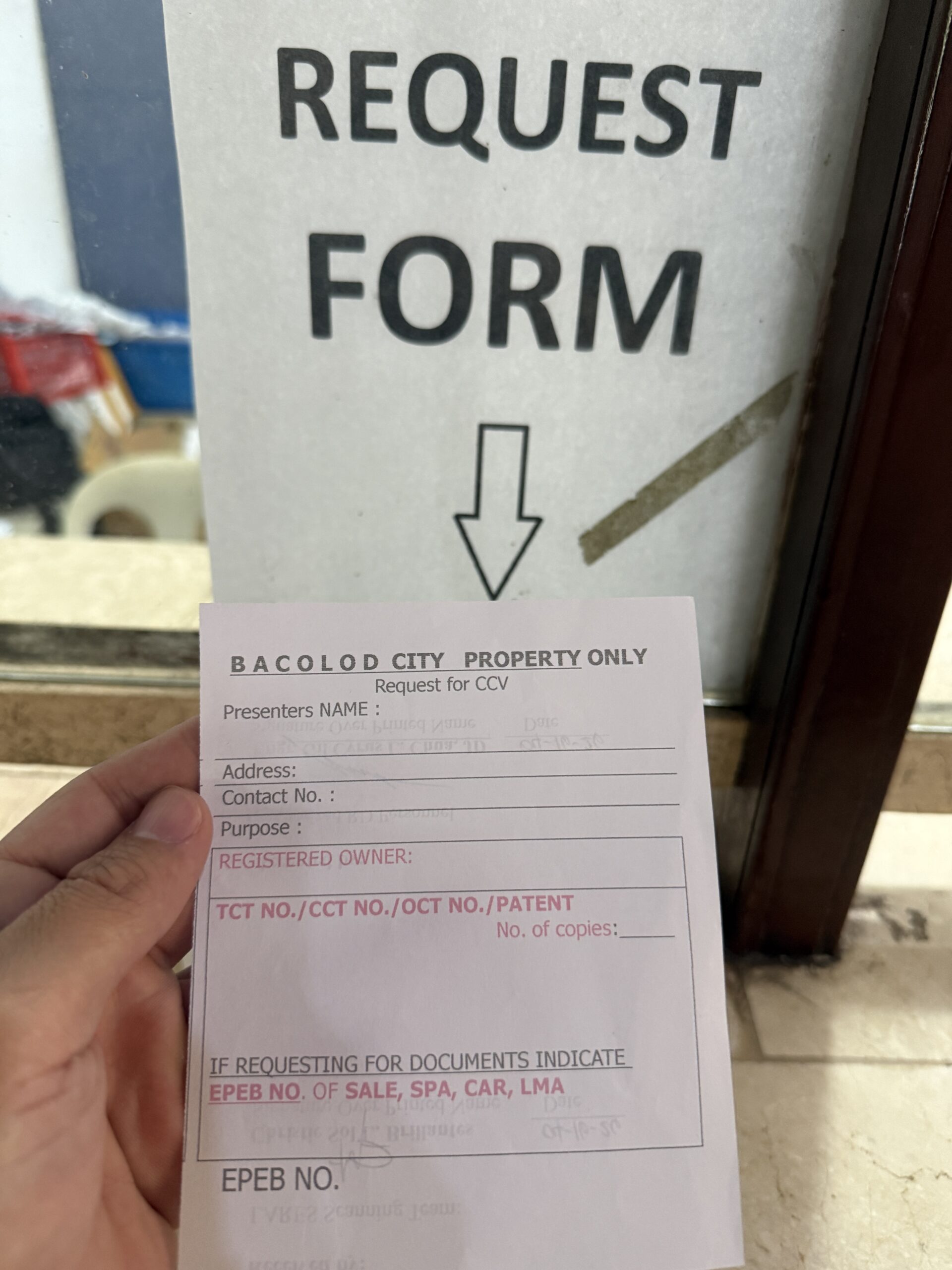
When verifying a property in Bacolod City, you or your authorized representative must provide specific details to process the request. Ensure you have the following information gathered before queuing:
[ ] Presenter’s Name;
[ ] Complete Current Address;
[ ] Active Contact No.
[ ] Complete name of the Registered Owner;
[ ] Specific Title References: TCT No./ CCT No. /OCT No. / Patent;
[ ] Number of copies;
[ ] Transaction Cross References: EPEB (Electronic Primary Entry Book) Number of Sale, SPA, (Certificate Authorizing Registration) CAR, (Land Management Agreement) LMA. This transaction is made at the ground floor, at the outer left portion of the ROD. Look for the glass window to talk to a receiving/releasing officer.
[ ] Photocopy of the Valid ID of the presenter
Where to Go
This transaction takes place on the ground floor, at the outer left portion of the ROD building. Look directly for the glass window to speak with the designated receiving and releasing officer.
Processing Timeline
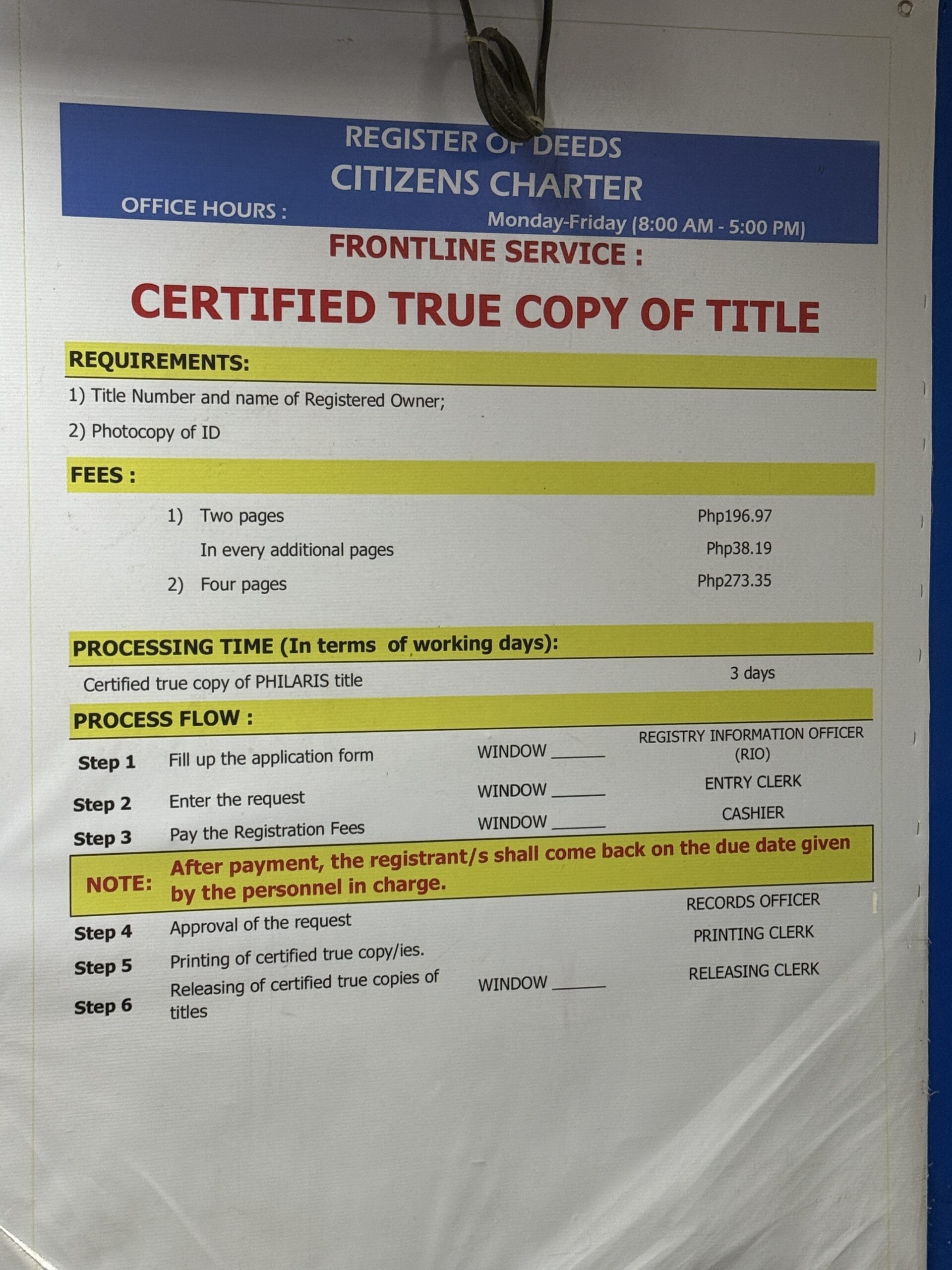
Bacolod utilizes the computeraized PHILARIS system. The official processing time is 3 working days. This flow accounts for:
- Receipt and encoding of your formal request;
- Review and digital approval by the central records officer;
- Physical printing of the CTC;
- Final authentication and release at the glass window (releasing area).
Official ROD Fees:
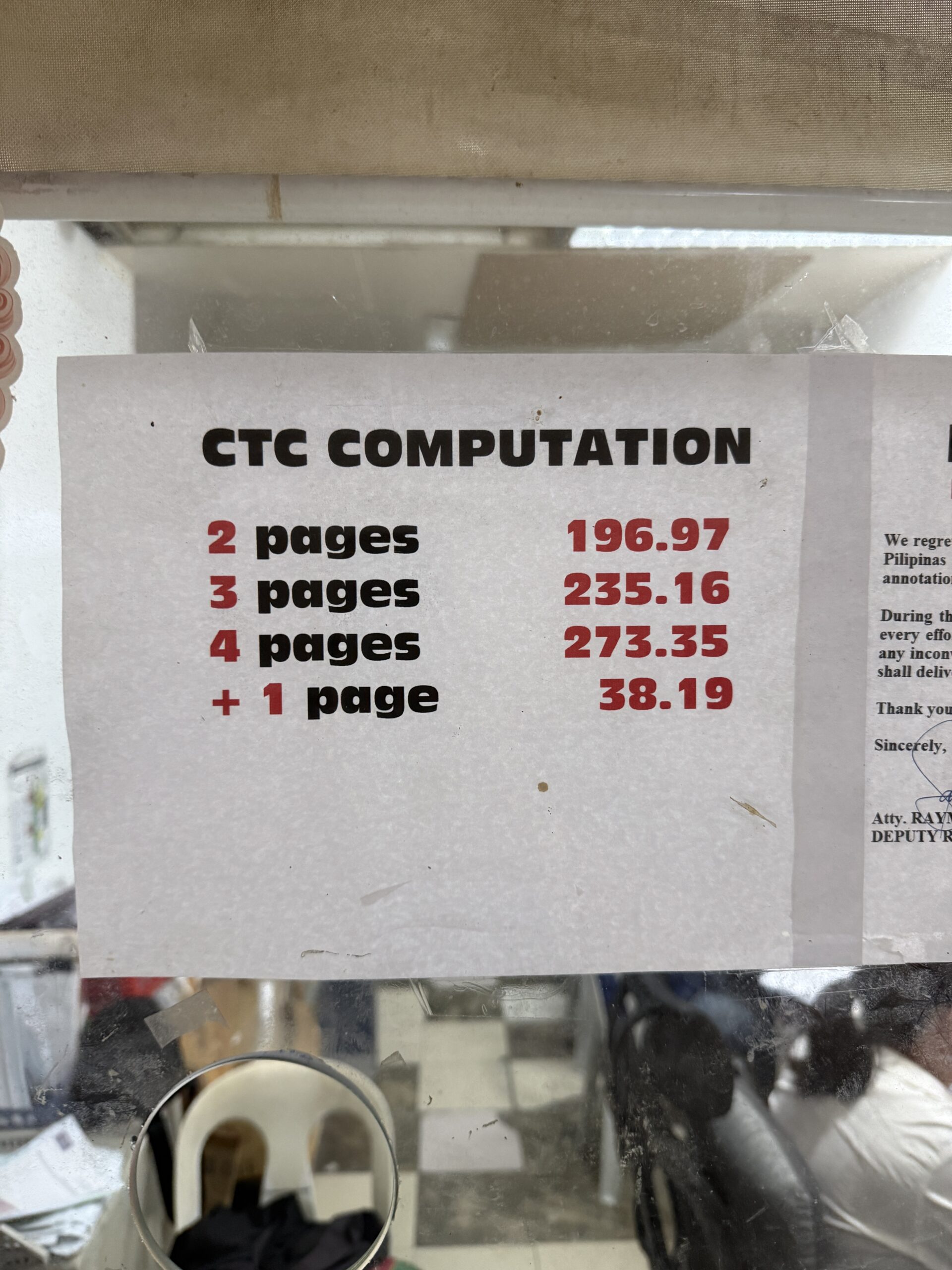
The Registry of Deeds implements a standardized pricing structure based on the page count of the specific title you are pulling.
The ROD’s fees as of May 2026 are as follows: (a) 2 pages: 196.97; (b) 3 pages: 235.16; (c) 4 pages: 273.35; (d) for every extra page: 38.19.
Note: Always ensure you have exact or flexible cash amounts on hand when dealing with government cashiers to avoid processing delays.
Lawyer’s Insights
- The ROD Bacolod does not just store titles; it is also the repository for the underlying legal instruments that move property. In lieu of this, the ROD Bacolod can also provide copies of Deeds of Sale upon request and payment.
- If you notice that a land was subject to a deed of sale recently, pulling the previous Deed of Sale allows us to cross-reference whether the transaction was executed properly, whether the correct marital consents were obtained, and whether the purchase price aligns with tax declarations.
- Furthermore, always cross-reference your fresh ROD title with the City Assessor’s Office records. If the title is in the buyer’s name but the Tax Declaration is still stuck under the old developer’s name, you face a property that is vulnerable to tax tracking issues and delays in local clearances.
Protect Your Investment
Real estate is often the largest financial investment you will make. Do not leave its security to verbal promises or outdated paperwork. Let our legal team handle the heavy lifting, navigate the glass windows of the ROD, cross-reference LGU data, and deliver a comprehensive due diligence report that guarantees your peace of mind.