

Embedded: Facebook post of Stetson South East Asia showing that we won the Best Overall Memorial in the entire region, and we also moved up to Quarter Finals. The Stetson International Environmental Moot Court Competition is the world’s largest moot court competition devoted exclusively to environmental issues. Our position paper was reviewed by legal experts from various continents and ranked the best in the 2024 competition.
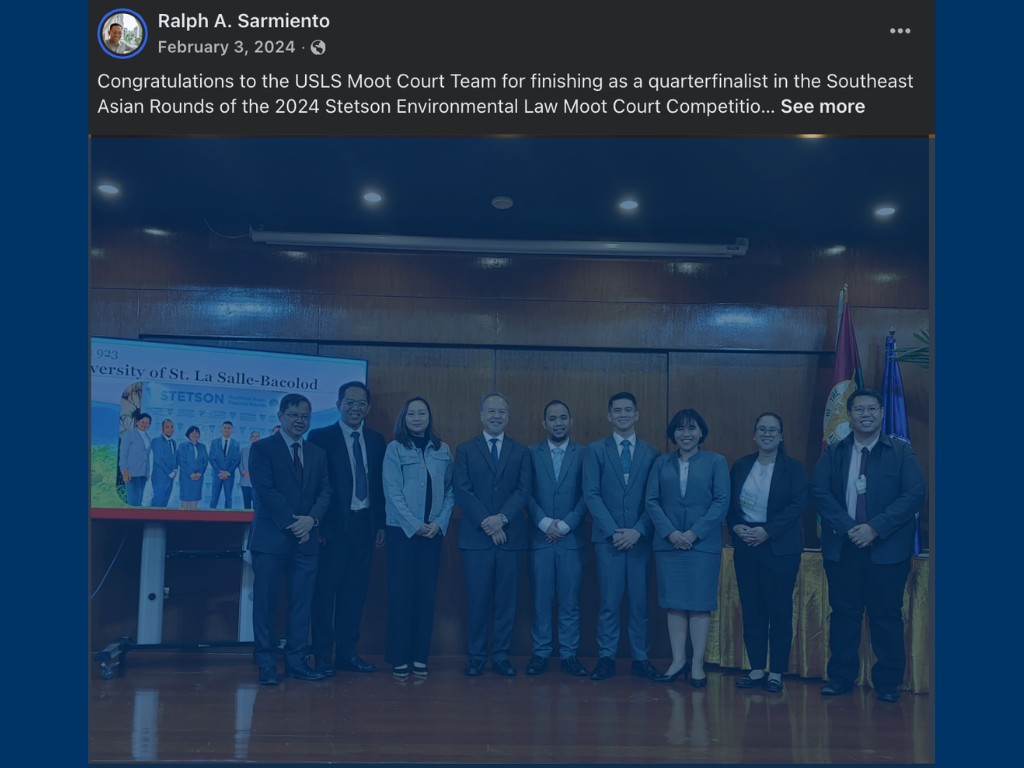
Photo: With the retired judge of the International Criminal Court (ICC), Raul Pangalangan, UP Professor Rommel Casis, and Dean Ralph Sarmiento. (Source: Dean Sarmiento’s post)
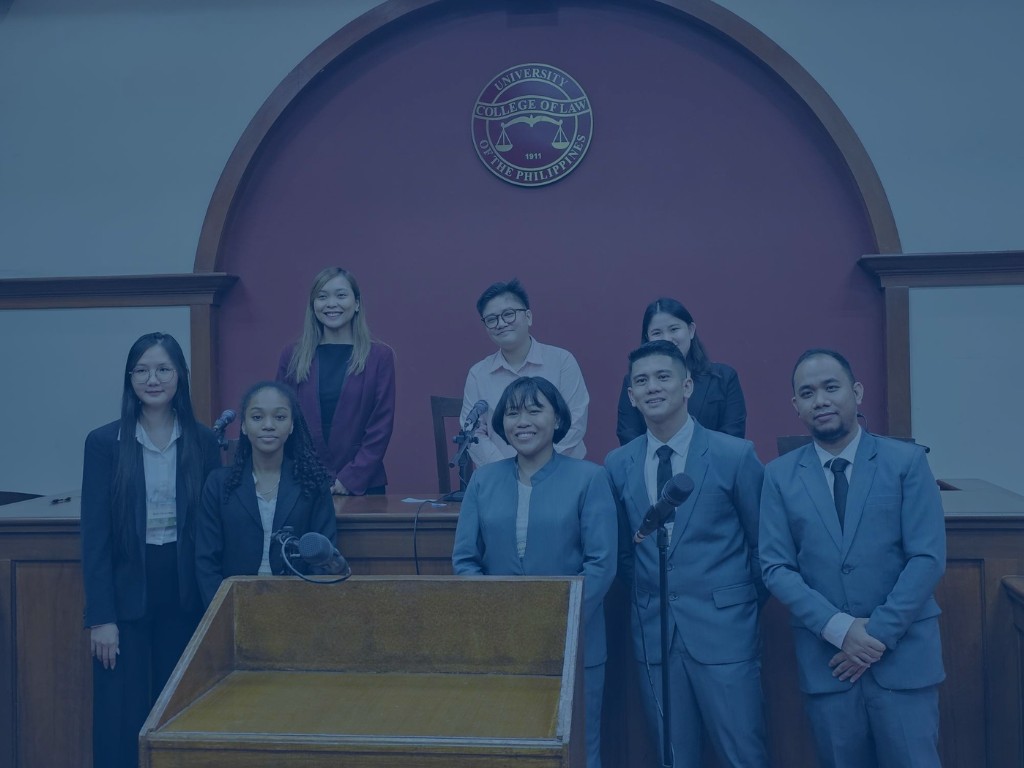
Together with my team at the College of Law, here are the skills that we have demonstrated in this memorial/portfolio:
Advanced Research & Analysis Services

- Deep Subject Matter Research (International Law/Policy): Ability to conduct extensive research across specialized document types, including international conventions (treaties), judicial/arbitral decisions, UN documents, and legal scholarship (books/articles).
- Case Law and Jurisprudence Analysis: Skill in summarizing and applying complex legal principles and judicial precedents (e.g., Monetary Gold, Pulp Mills, Trail Smelter) to support a specific argument.
- Factual Synthesis and Application: Taking a large body of facts (Statement of Facts) and synthesizing them to support intricate legal arguments (e.g., using the history of civil wars, Ebola, and COVID-19 to claim force majeure).
- Technical Compliance Research: Researching and documenting compliance with highly specific and technical international frameworks like the Paris Agreement (e.g., ITMO system, Article 6, Article 9)and the UNFCCC.
Technical & Formal Writing
- Formal Legal/Academic Drafting: Expertise in structuring, formatting, and drafting lengthy, formal, and persuasive documents (Memorials/Briefs) with complex hierarchical outlines (e.g., Roman numerals, letters, Arabic numerals).
- Argument Development and Structuring: Building detailed, multi-layered arguments that anticipate counter-arguments (e.g., using “Assuming arguendo,” “Alternatively”).
- Clarity and Precision in Prose: Ability to write in a clear, precise, and objective tone appropriate for official proceedings, ensuring concepts like jus standi, pacta sunt servanda, and erga omnes are correctly positioned.
Document Management & Citation

- Advanced Citation Management: Creating and managing complex, multi-layered footnotes/citations for a vast Index of Authorities and accurately linking every piece of information to primary and secondary sources (e.g., Treaty articles, I.C.J. Judgments, ILC Draft Articles).
- Document Organization and Cross-Referencing: Organizing preliminary sections like the Table of Contents, Index of Authorities, Questions Presented, and cross-referencing between sections (e.g., citing Argument I).
- Formatting for Formal Submission: Ensuring strict adherence to specific formatting requirements for official document submission (e.g., page numbering, headings, table layout).


 English