

The court observation and appearances program as a Law Student Practitioner (LSP) is a primary way for us law students to gain experiential learning, to develop practical knowledge, skills, and values for the application of law and the promotion of social justice.
This is part of the Clinical Legal Education Program (CLEP) Externships with the Courts, and we are the second batch of USLS Law Student Practitioners (LSPs) to participate in this program.
My role as a law student is the following:
- To observe and be bound by the Code of Conduct for Court Personnel (A.M.19-03-24-SC);
- To be accountable for the office records entrusted in our custody;
The court observation program is one of the highlights of my law school experience because it is unlike the classroom experience. It allowed me to see the law come to life and transcend the real concerns of ordinary people.
The faces of the various people I met in the Hall of Justice in Bacolod City gave form to the texts I have been reading over the past years.
II. Description of Court Observations
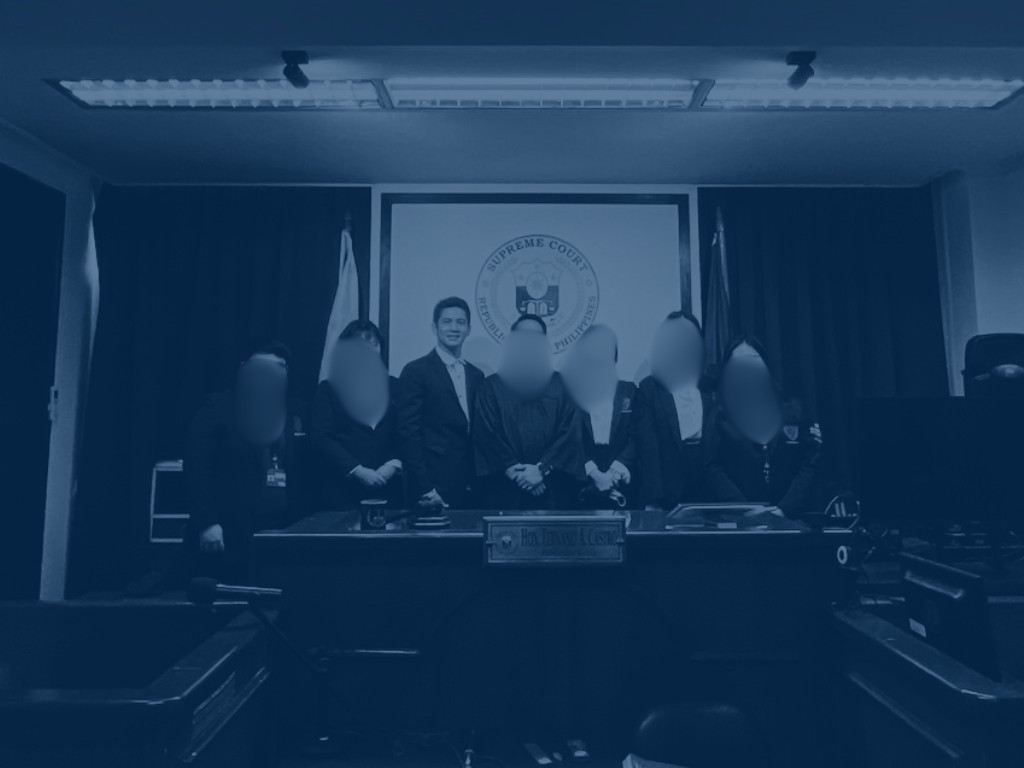
The courts I have visited are the following:
- At Branch 52 on June 2, 2023: We attended and observed different stages of criminal proceedings, specifically drug prosecution proceedings. The stages we observed were arraignment, pre-trial, presentation of evidence, and promulgation of judgment. I was one of the first in our batch to do the court observation because the day after this, June 3, we were scheduled to do the mock trial. And since Fiscal Johnnil Acero, our supervising lawyer for the mock trial, is also the fiscal in this June 2 drug hearing, we were allowed to attend. The Presiding Judge was Hon. Raymond Joseph G. Javier. I witnessed the judge ensure that the chain of custody was maintained correctly. During my observation, the witnesses were policemen who conducted the buy-bust operation.
- At Branch 41 from June 6 to 8, 2023: From June 6 to 8, 2023, we were given the privilege to attend the proceedings in Branch 41, a Family Court presided over by Presiding Judge Fernand A. Castro. Being a Family Court, the cases involved minors. The classifications that were observed were both civil and criminal. We were able to observe different stages of the proceedings, such as: (a) arraignment; (b) pre-trial; (c.) initial trial; (d) re-arraignment; (e) presentation of evidence; (f) and promulgation. We were able to witness different cases such as proceedings for the nullity of marriage, hearings on attorney’s lien, RA 7610, RA 9262, Statutory Rape, Murder, and Acts of Lasciviousness.
- At Branch 3 (MTCC) on June 19, 2023, I also had the opportunity to witness small claims proceedings in MTCC Branch 3 with Presiding Judge Hon. Hans Villaster. The cases were classified as civil, being small-claims by nature. The petitioners were all financing companies, and the respondents were private individual debtors.
- At Branch 7 (MTCC) on June 26, 2023: On this day, all cases I observed were criminal in nature, including violations of BP 22, theft, other light threats, less serious physical injuries, estafa, grave threats, and falsification of public documents.
- At Branch 7 (MTCC) on June 27, 2023: The next day, at the same branch, I observed all civil cases involving applications for the writ of replevin and the writ of execution. There were also small-claims proceedings, pre-trial hearings, presentations of evidence, and resolutions.
- At Branch 1 on July 6, 2023: This is my last day of court observation, where I was able to observe all criminal cases. The incidents involve PD 1602 violations, theft, BP 22 violations, slight oral defamation, and grave threats.
III. Lessons Learned
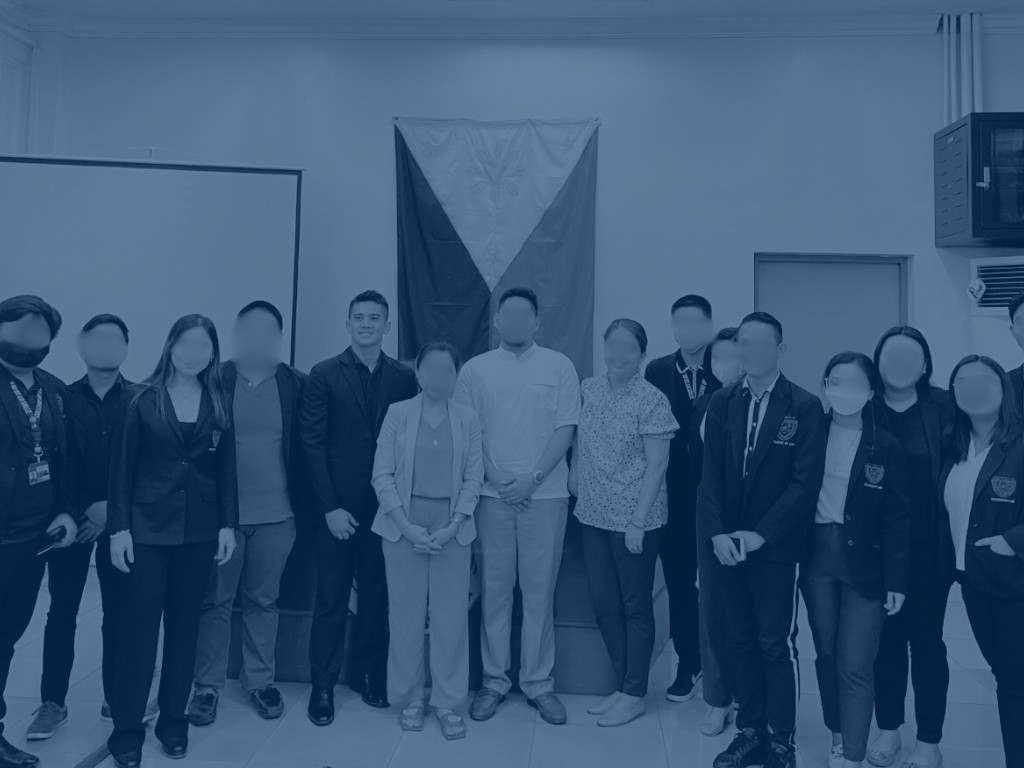
The significance of court observation experiences lies not only in the exposure to the practical application of legal theory but also in the intimate understanding of the multifaceted realities of the justice system and its effects on marginalized communities.
Careful observation of the chain of custody. Through observing the workings of the Drugs Court, I was provided a concrete manifestation of the complex dynamics between prosecution and defense. The study and practice of law rely on understanding such proceedings, and the arraignment, pre-trial, and judgment promulgation brought to life the theoretical aspects of criminal prosecution we learned in school. Furthermore, the Drug Court epitomizes the state’s response to a significant social issue – substance abuse. Here, careful adherence to the chain of custody ensures the rights of the accused are upheld, furthering the principles of justice and due process, even for those society often marginalizes. The professionalism of the policemen during interrogation is also very notable. They answered the judge’s difficult questions with calmness and self-control.
The crucial role of the legal system in protecting vulnerable individuals. In observing proceedings in a Family Court, the complexity of balancing legalities with emotionally charged familial disputes was brought into sharp focus. Civil and criminal cases involving minors particularly emphasized the legal system’s pivotal role in protecting vulnerable individuals, offering justice to those marginalized by age and familial circumstances. By appreciating these dynamics, I could hone my understanding of social justice principles within a real-world context. Here, I also witnessed the judge’s professionalism, particularly in his demeanor during the case involving the minor. It was the first for us, LSPs in that room, to hear a case involving a rape incident against a minor. Usually, non-family members are not allowed. But we had the special permit to witness these firsthand.
Justice from claims by those from lower socioeconomic strata of society. The small claims proceedings in the MTCC Branch 3 exposed me to a different facet of law, one involving the everyday financial disputes between private entities and individuals. Often, these debtors come from lower socioeconomic strata. The understanding gleaned from these proceedings is crucial for representing these marginalized individuals and providing them with the justice they are due, despite their limited resources.
Role of the legal profession in maintaining social justice and equality. At Branch 7 (MTCC), observing various criminal proceedings, such as theft, minor threats, and falsification of public documents, offered me a broader perspective on different aspects of criminal law. The following day, my encounter with civil cases illustrated the complementary nature of civil and criminal law and the justice they seek to uphold.
In the end, these court observations are more than mere academic exercises. They are a profound exploration of the law’s real-world implications, particularly for marginalized groups. By witnessing the law’s application across various contexts, my commitment to using the law as a tool for social justice was strengthened. These experiences reminded me of my responsibility to ensure that justice is dispensed without discrimination, serving as a testament to the vital role the legal profession plays in maintaining social justice and equality.
IV. Challenges
Navigating the Complexity of the Legal System: The legal system is intricate and diverse, with varying procedures and practices across different branches and types of courts. This complexity can present a challenge for law students and new practitioners seeking to understand and navigate the system effectively.
Balancing Emotional Sensitivity and Legal Objectivity: In sensitive cases involving families or minors, there is a need to balance empathy and emotional understanding with the demands of legal objectivity and impartiality. This can be a difficult equilibrium to maintain, especially for those new to the profession.
Resource Constraints: Especially in small claims proceedings, resource limitations can be a significant challenge. Financial constraints can limit marginalized individuals’ access to quality legal representation, potentially affecting the outcome of their case.
Overburdened Legal System: High caseloads and court congestion can lead to delays in proceedings, which can affect access to justice, particularly for marginalized communities.
MTC Experience for our Practice Court I and II Subject
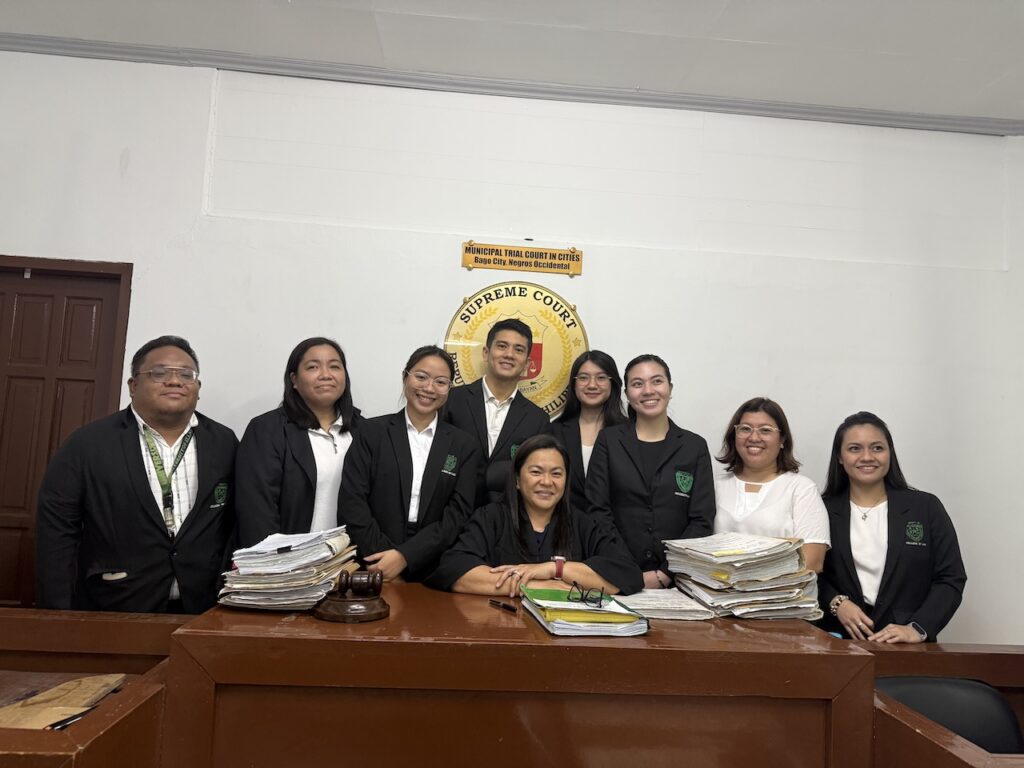
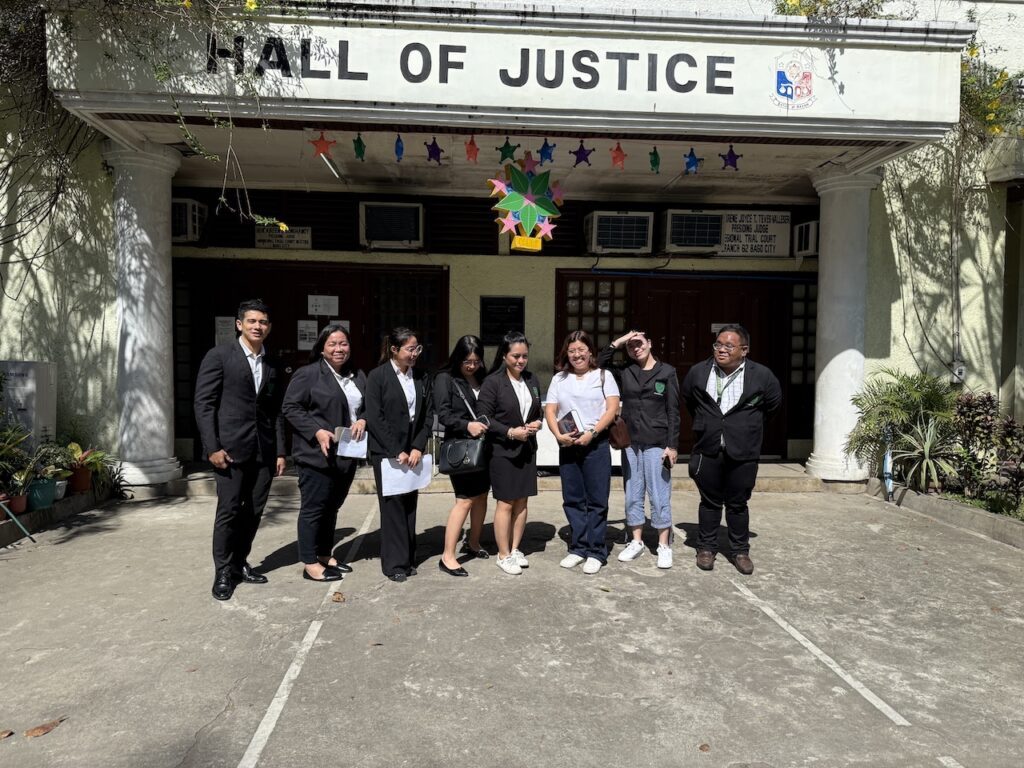
The two photos above document our visit to the Municipal Trial Court in Cities (MTCC), where our professor, Judge Aireen Bonghanoy, was presiding. On this day, we observed the trial, arraignment, status hearing, and promulgation of several criminal cases.

 English